
IMAGE 1: The first image of a black hole, from the galaxy Messier 87. 2019. Horizon Telescope Collaboration, via National Science Foundation. I included this because I think a black hole is the closest thing we have to a hyper-object.
APOCOLYPTIC MODERN DEVELOPMENT
by Eddie Tang | class of 2021, Philosophy and Evolutionary Biology, Rice University
ABSTRACT
Using Morton’s definition of “hyper-object” and Nixon’s theory of “slow violence”, I seek to uncover the complex, unforeseen consequences of certain sites of modern development. Modern development exemplifies the concept of different temporalities between humanity and Planet Earth; thus, the apocalypse has already happened. Based out of the irrational fear of running out of electricity, central Taiwan has, since 1990, become home to a power plant that continues to be the world’s largest contributor to dioxin and carbon dioxide emissions. I firstly examine biomagnification as a scientific, conceptual hyper-object in Central Taiwan using Rachel Carson’s Silent Spring as the framework. Next, I relate biomagnification through slow violence effectively to toxic space within the Louisiana-Mississippi Chemical Corridor, an 85 mile long riverscape which is home to 136 petrochemical facilities. I use 4th dimensional physical theory to prove that humanity operates on a different scale of temporality than that of planet Earth. Finally, I end the podcast with discussion of Nuclear Power as the ultimate hyper-object, citing studies using an eco-critical lens on Fukushima and Chernobyl. Hopefully, there is a better understanding of what so called “modern development” really is.
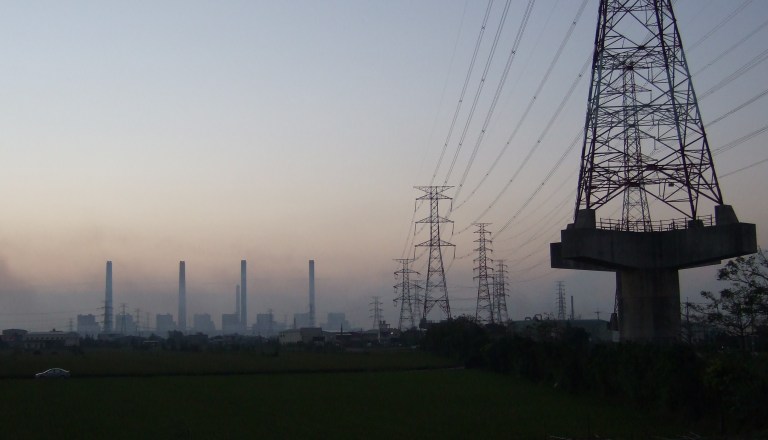
IMAGE 2: Outgoing transmission line from Taichung Power Plant. H.T. Yu, 2007
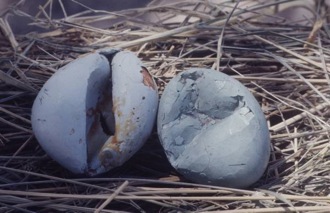
IMAGE 3: Fragile bald eagle eggs. The unhatched eagles die inside, unable to develop in such an environment. Kevin White, “The Video Project”, 2013.
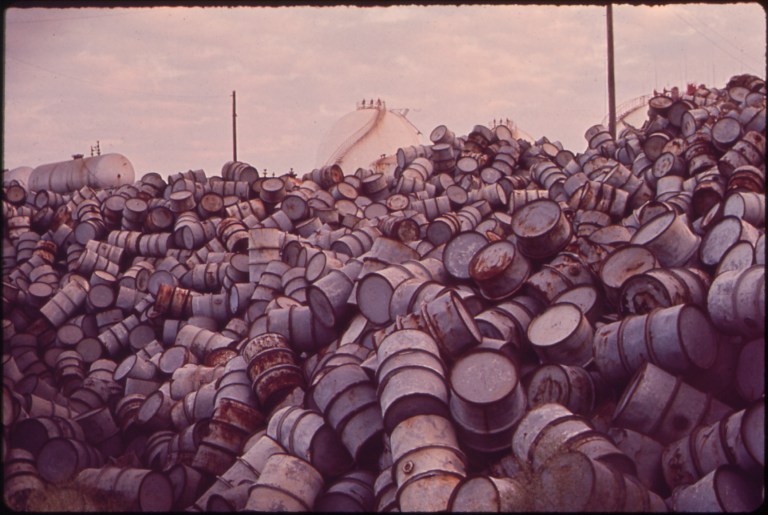
IMAGE 4: Free Rights Image: A mound of oil drums near the Baton Rouge ExxonMobil Refinery along the Mississippi River in December 1972
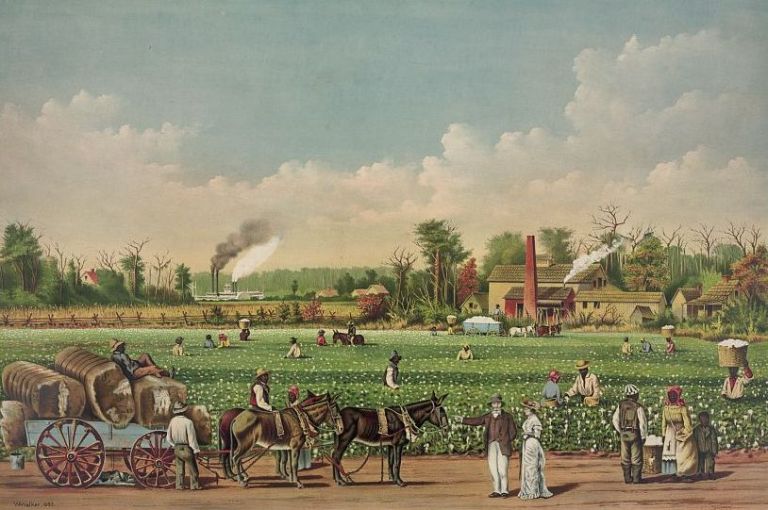
IMAGE 5: A cotton plantation on the Mississippi, 1884 lithograph. [New York] : Currier & Ives, 1884.
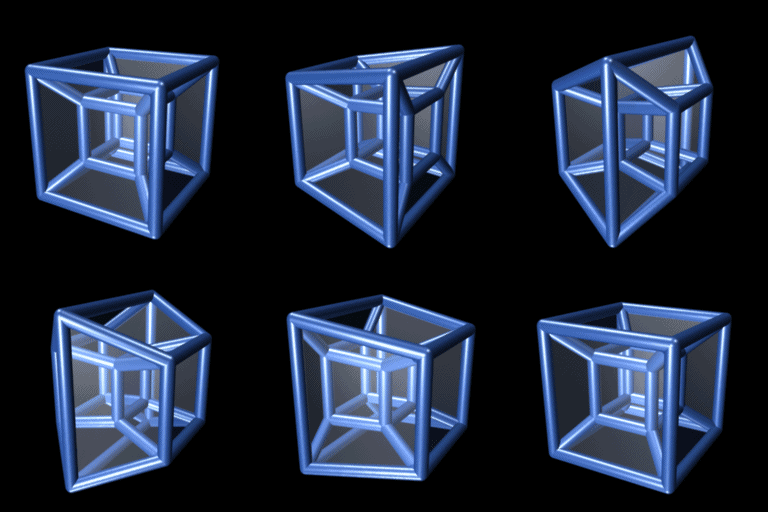
IMAGE 6: The 4D equivalent of a cube, known as a tessaract. The tesseract is rotating in four-dimensional space, and it is displayed here projected into two dimensions. Jason Hise with Maya and Macromedia Fireworks. 2007
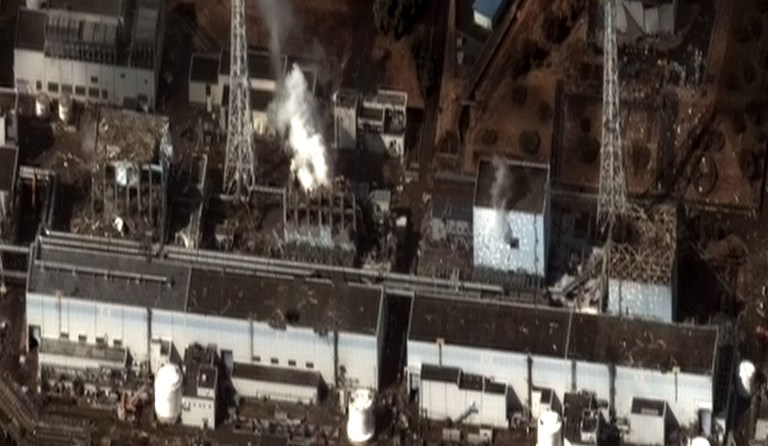
IMAGE 7: Free Rights Image: Drone Shot of Fukushima Nuclear Power Plant, 5 days after the tsunami. 2011
Bibliography
Introduction to the Fourth Dimension. Accessed May 01, 2019. http://hi.gher.space/classic/introduction.htm.
Carson, Rachel. Silent Spring. London: Penguin Books, in Association with Hamish Hamilton, 2015.
Chi, Wenchang, director. The Poisoned Sky. Taiwan, 2009.
ECOCRITICISM IN TAIWAN: Identity, Environment, and the Arts. LANHAM: LEXINGTON Books, 2017.
Follett, Richard J. “The Sugar Masters: Slavery, Economic Development, and Modernization on Louisiana Sugar Plantations, 1820-1860.” PhD diss.
Manning, Henry Parker. The Fourth Dimension Simply Explained. Gloucester, MA: Peter Smith, 1977.
Montgomery, Scott L., and Jr Thomas Graham. Seeing the Light: The Case for Nuclear Power in the 21st Century. Cambridge: Cambridge University Press, 2017.
Morton, Timothy. Hyperobjects: Philosophy and Ecology after the End of the World. Minneapolis: University of Minnesota Press, 2014.
Nixon, Rob. Slow Violence and the Environmentalism of the Poor. Cambridge, MA: Harvard University Press, 2013.
 EVOLUTION CUSTOM BUILT