

Attributed to Hernán Cortés, Nuremberg Map of Tenochtitlan and the Gulf Coast (1524), The Newberry Library, Chicago, Collection No. Ayer 655.51.c8.1524d
MEXICO CITY: WATER AND URBAN FORM IN COLONIAL AND MODERN CARTOGRAPHIES
by Tiffany Xuby | 3rd year M.Arch Student in Architecture, Rice University
ABSTRACT
This research podcast episode examines cartographic and painted representations of Mexico City’s history of hydrology and urban development. In examining maps we can interrogate structures of power and epistemic world views embedded in colonialism and modernity. Built on raised land at the base of a watershed basin, Mexico City’s urban development can be construed as an ongoing negotiation with water. The Spanish defeat of the Aztec capital in the early 16th century and subsequent draining of the basin’s lakes marks a shift not only in ideological approaches to water and nature, but also epistemologies of space, form, and symbols, that manifest in modes of representation. We will explore two specific examples of visual culture from Colonial and Modern periods: Hernan Cortes’ Nuremberg map (1524) and Juan O’Gorman’s Mexico City landscape painting (1949), that depict Mexico City’s built environment and its complex relationship with empire, race, and water ecology. This exploration will draw from Louis Marin’s and J.B. Harley’s theories in critical cartography and Timothy Morton’s writings on nature and agency. In this podcast, we will discuss how these two images’ cartographic techniques and narratives not only represent, but also inform, constitute, and critique our understandings of colonial structures of control and Modern imaginaries.
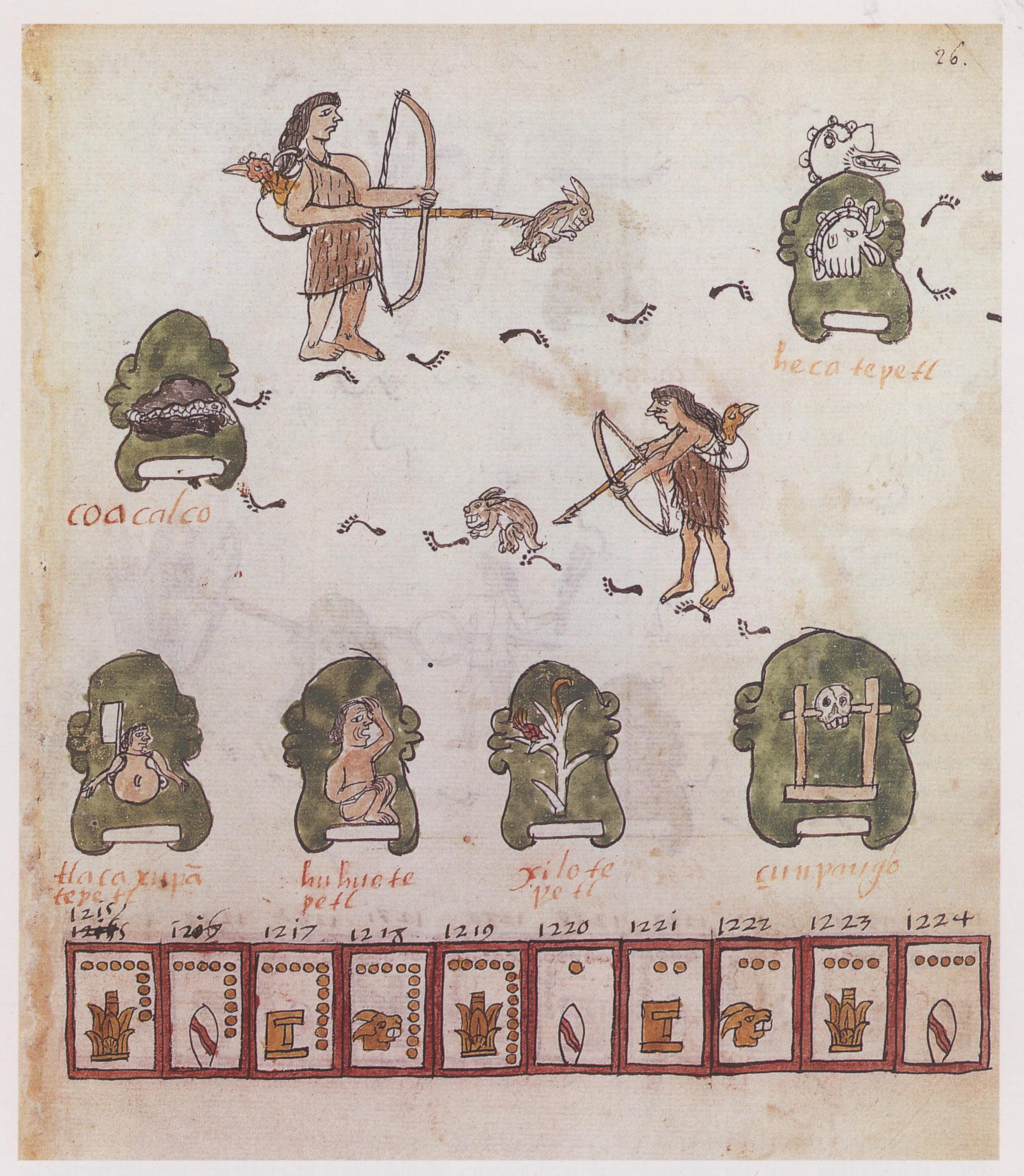


Sources:
Margarita Carballal Staedtler and María Flores Hernández, “Hydraulic Features of the Mexico-Texcoco Lakes during the Postclassic Period,” in Precolumbian Water Management, ed. L. J. Lucero and B. W. Fash, Tucson: University of Arizona Press, 2006.
James N. Green, Thomas E. Skidmore, Peter H. Smith, Modern Latin America, Oxford: Oxford University Press, 2018.
J. B. Harley, The New Nature of Maps: Essays in the History of Cartography, ed. by Paul Laxton, Baltimore:Johns Hopkins University Press, 2002.
Alejandro Hernandez, “Juan O’Gorman; Architecture and Surface,” The Journal of Decorative and Propaganda Arts, Vol. 26, 2010, 206-229.
Richard Kagan, Urban Images of the Hispanic World, New Haven: Yale University Press, 2000.
Dana Leibsohn, “Colony and Cartography: Shifting Signs on Indigenous Maps of New Spain,” in Reframing the Renaissance: Visual Culture in Europe and Latin America, 1450-1650, ed. Claire Farago (New Haven: Yale University Press, 1995), 267-268.
John Lopez, The Hydrographic City: Mapping Mexico City’s Urban Form in Relation to its Aquatic Condition, 1521-1700, Phd. dissertation, Massachusetts Institute of Technology, 2013.
Louis Marin, “The City in Its Map and Portrait,” in On Representation, Stanford: Stanford University Press, 2001, 202-218.
Timothy Morton, “Sublime Objects,” in Speculations II, ed. Michael Austin et al., Speculations Journal, 2011, 207-227.
Timothy Morton, “Unsustaining,” World Picture Journal, Vol 5, 2011, accessed April 1, 2019. http://www.worldpicturejournal.com/WP_5/Morton.html
Karl Offen, Jordana Dym, “Maps and the Teaching of Latin American History,” Hispanic American Historical Review, Vol 92, No. 2, April 2012, 214-246.
Matthew Vitz, City on a Lake, Durham, Duke University Press, 2018.
Michael D. Wolfe, Watering the Revolution: An Environmental and Technological History of Agrarian Reform in Mexico, Durham, Duke University Press, 2018.
Adriana Zavala, “Mexico City in Juan O’Gorman’s Imagination,” Hispanic Research Journal, Vol. 8, No. 5, December 2007, 491–506
 EVOLUTION CUSTOM BUILT