
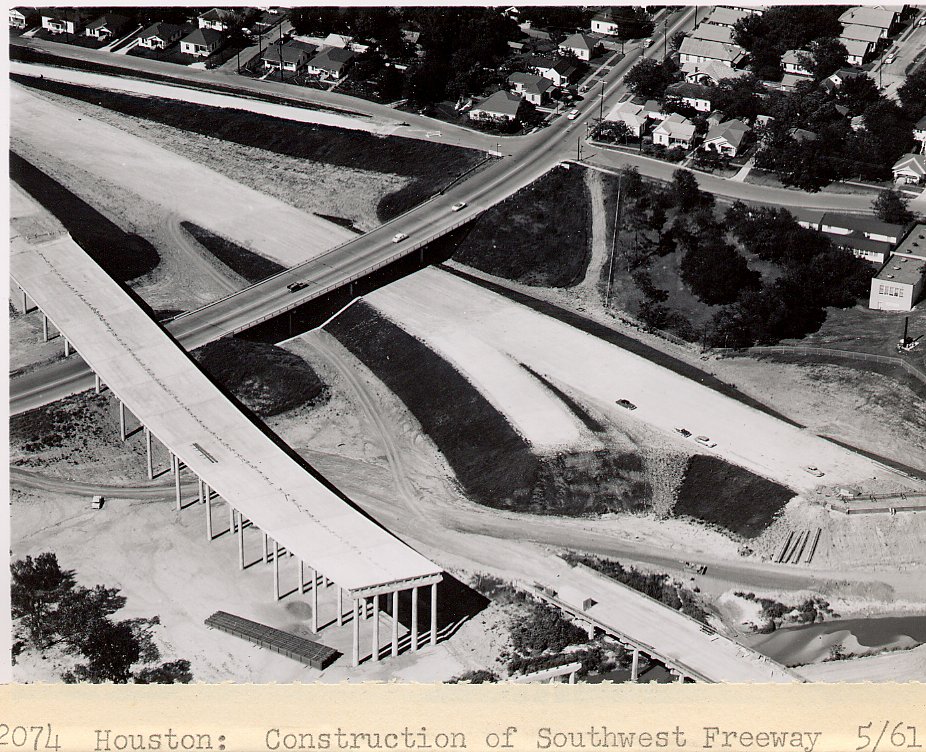
IMAGE 1: “Houston: Construction of Southwest Freeway” 1961. Houston. Photo:
Texas Freeway Public Library.
BLOODY HIGHWAY
By Lola Deng | Class of 2021, Environmental Studies, Rice University
ABSTRACT
In this episode, I am outlining how highway construction in Houston has historically been a tool for eliminating social minorities’ neighborhood in the name of “urban renewal.” It focused on the negative influences construction had and is still having on the black community, specifically the fifth and the third neighborhood. The podcast tries to draw a connection highways, and the modernist ideas of human/city evolution. It ended on stressing the importance of protecting the neighborhood in the role of a residence, and gave examples of how other city planning officials and citizens are starting to rebuild highways and address the problems that constructions has caused.
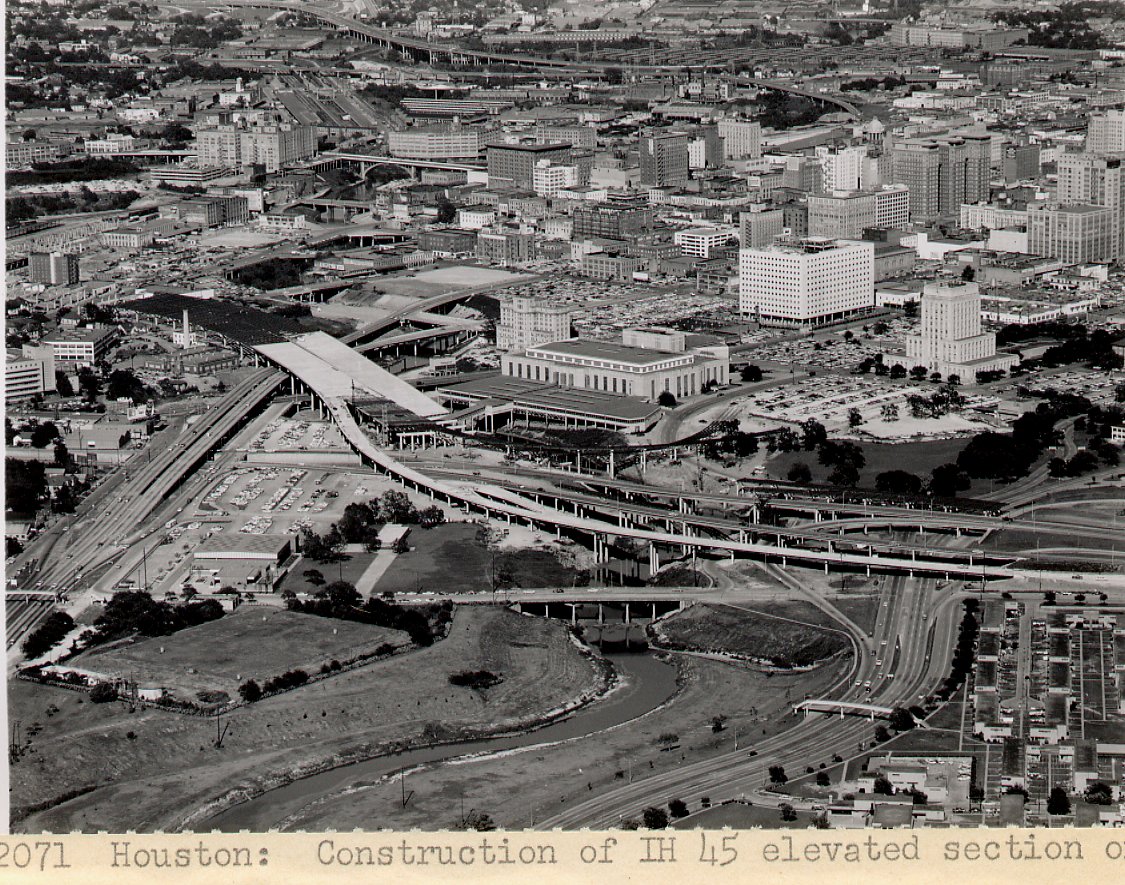
IMAGE 2: Houston: Construction of I-45, 1971. Houston. Photo: Texas Freeway Public Library.
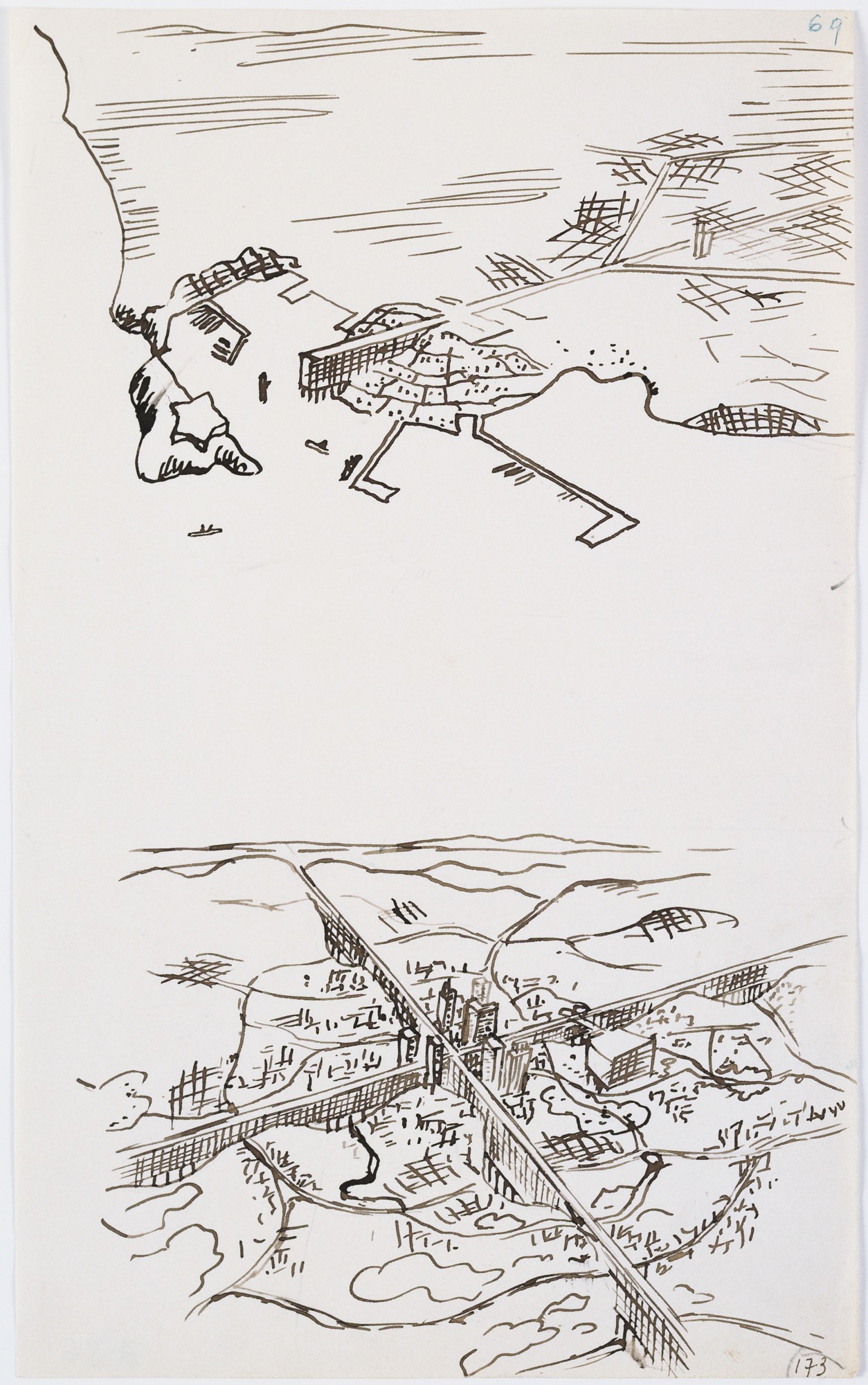
IMAGE 3: Le Corbusier,
Urban projects for Montevideo and São Paulo, Brazil. Aerial perspectives, 1929.
Montevideo and São Paulo. Photo: Fondation Le Corbusier.
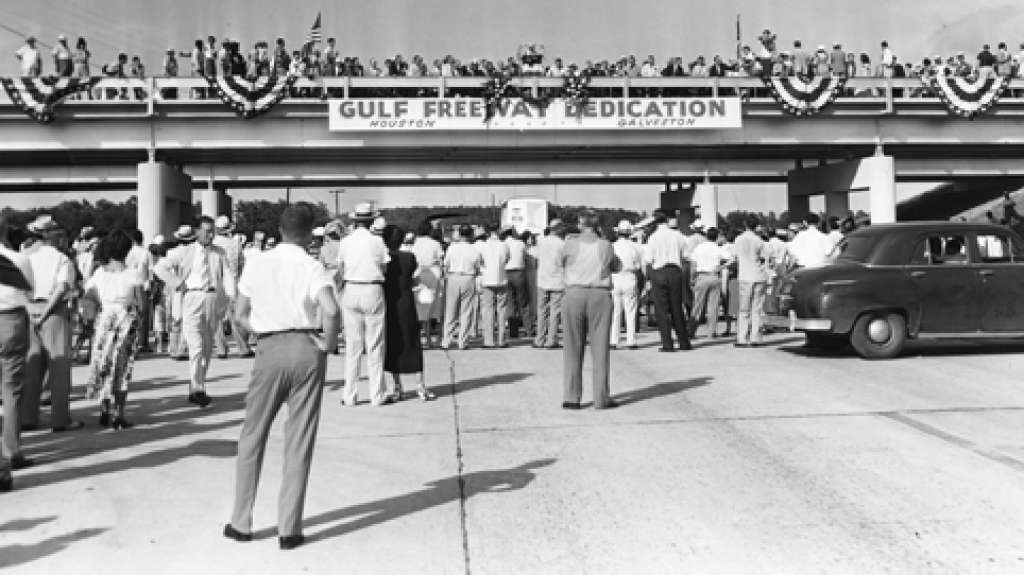
IMAGE 4: Launching of Gulf Freeway, 1952.
Houston. Photo: Gunnar Liljequist, Jr, Houston Chronicle.

IMAGE 5: Postcard with a view of gulf freeway, 1950s.
Houston. Photo:
Curt Teich Postcard Archives, Getty Images .

IMAGE 6: Increase in median housing value in the third ward 2000-2013, 2013.
Houston. Lester O. King, Jeffrey S. Lowe.
SOURCES:
Baker, Andrew C.”Power Moves: Transportation, Politics, and Development in Houston by Kyle Shelton (review).” Southwestern Historical Quarterly, vol. 122 no. 1, 2018, pp. 129-130.
Beaumont, Penny; Brinkmann, Rhonda; Ellis, David; Pourteau Chris; Webb, Brandon. “The Development of the Interstate Highway System in Texas” Southwest Region University Transportation Center Project, P1-p10.
Congress for the New Urbanism. “Freeways Without Futures 2019.” 2019.
Choudary, Wendie; Wu, Jie; Zhang, Mingming. “Neighborhood Gentrification across Harris County: 1990 to 2016.” Rice University, Kinder Institute for Urban Research. 2018.
King, Lester; Lowe Jeffrey. “We want to do it differently: resisting gentrification in Houston’s northern third ward.” Journal of Urban Affairs, Volume 40, 2018-issue 8.
López-Durán, Fabiola. Eugenics in the Garden: Transatlantic Architecture and the Crafting of Modernity. University of Texas Press, 2018.
McGee, Henry W. “Afro-American Resistance to Gentrification and the Demise of Integrationist Ideology in the United States.” The Urban Lawyer, vol. 23, no. 1, 1991, pp. 25–44.
Miriam Zuk, Ariel H. Bierbaum, Karen Chapple, Karolina Gorska, Anastasia Loukaitou-Sideris, Paul Ong, Trevor Thomas. “Gentrification, Displacement and the Role of Public Investment: A Literature Review.” California Air Resources Board. 2015.
Miriam Zuk, Ariel H. Bierbaum, Karen Chapple, Karolina Gorska, Anastasia Loukaitou-Sideris, Paul Ong, Trevor Thomas. “Gentrification, Displacement and the Role of Public Investment: A Literature Review.” California Air Resources Board. 2015.
Pando, Patricia. “When there were wards: a series-In the Nickel, Houston’s fifth ward.” Houston History, Volume 8, No.3. P33-p37.
Pfeiffer, Deidre. Racial equity in the post-civil rights suburbs: evidence from US regions 2000-2012. Sage Journals, Volume 53, Issue 4. 2016. P799-p817.
Semuels, Alana. “The Role of Highways in American Poverty.” The Atlantic, 2016.
Shelton, Kyle. “Bike Battles: Who Owns the Roads?” Urban Edge Podcast, September, 2015.
Shelton, Kyle. “Building a Better Houston: Highways, Neighborhoods, and Infrastructural Citizenship in the 1970s.” Sage Journals, Volume 43, Issue 3. 2015. P421-444.
Shelton, Kyle. Power Moves. University of Texas Press, 2018, p11-p55.
Wittenberg, Gordon, Amanda Chang, and Kinder Institute For Urban Research. “Subdivision Plats Data in the Houston Area.” 2018.
 EVOLUTION CUSTOM BUILT